Russia’s “Thread-3” files go public: what the leaked dossier contains
A New York Post story revived claims that Soviet and post-Soviet institutions ran structured programs to collect and analyze UAP reports. The real object of scrutiny is a translated dossier now circulating online — presented as a compilation tied to an effort described as “Thread-3”, spanning institutional framing, technical speculation, military cases, and a familiar “mostly explainable, some unknowns” conclusion.
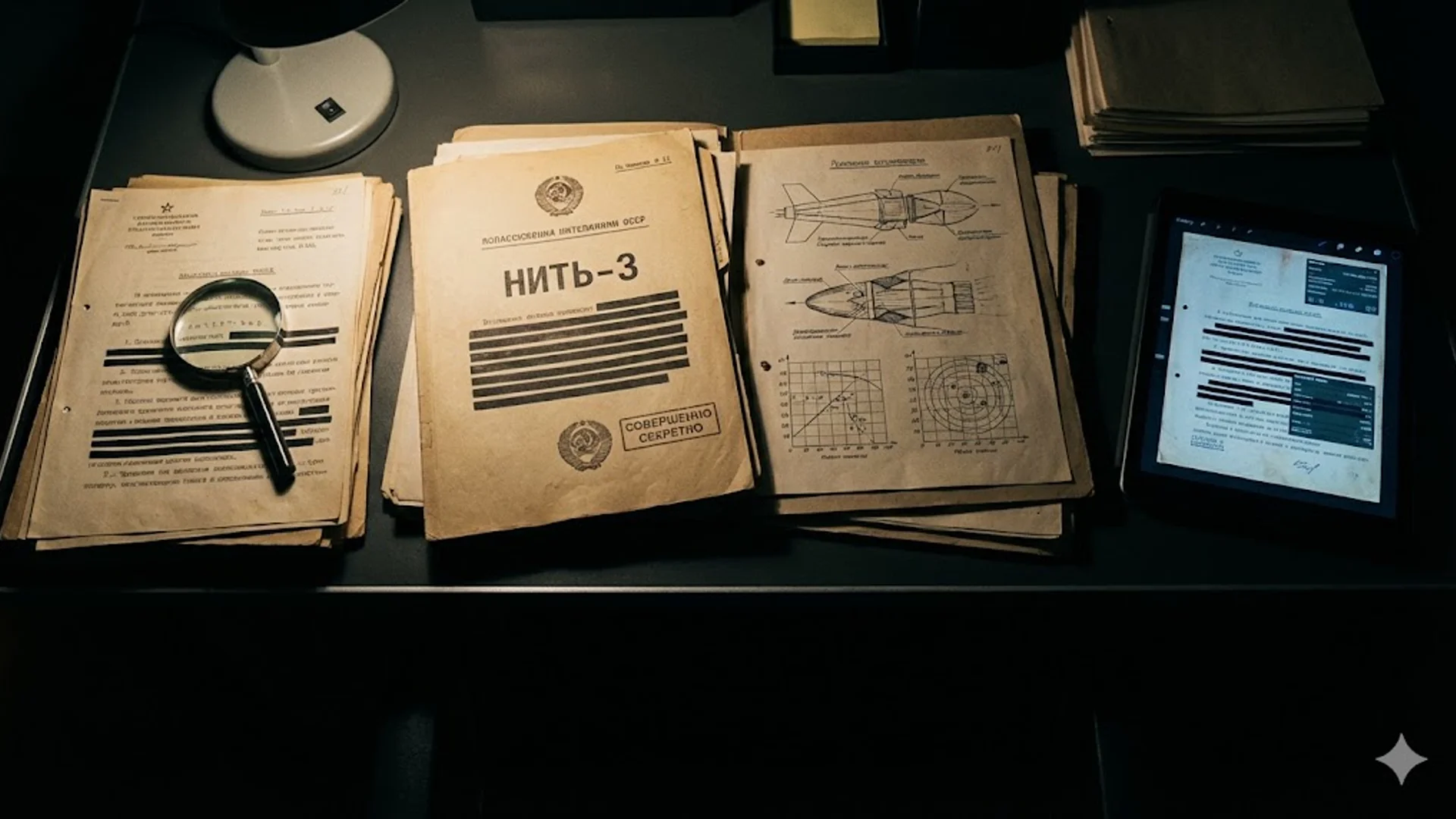
A recent New York Post story resurfaced a provocative claim: that Soviet and post-Soviet institutions quietly ran structured programs to collect and analyze UFO/UAP reports — despite decades of official dismissiveness.
That article is the hook. The real substance (and the real opportunity for scrutiny) is the translated dossier now circulating online, presented as a compilation of materials tied to a Soviet/Russian research effort described as “Thread-3” — focused on anomalous aerospace phenomena (AAP) and, notably, non-traditional propulsion concepts. (See the PDF in the Primary sources section.)
From tabloid hook to dossier
The leaked PDF (English translation) is presented as a compiled package rather than a single, clean, internally consistent report. It moves across institutional framing, historical context, technical speculation, military narratives, “contactee” testimony, cross-references to U.S. lore, and a concluding posture that mixes debunking with a residual “unknown” category.
Why George Knapp matters
If you’re trying to understand how unusual material enters the public conversation, George Knapp is a recurring node. He’s a long-time investigative reporter and one of the better-known UAP journalists in the U.S., often described by peers as a clearinghouse for leads, documents, and testimony from people who want to surface information.
The New York Post frames him as the person who brought these Russian documents out decades ago and released them publicly in January 2026. Knapp’s relevance here isn’t that he “proves” anything — it’s that he’s positioned in the ecosystem where claims, records, and witnesses converge, and he’s been treated as credible enough to provide testimony and materials for the record.
A concrete anchor: the congressional record
Knapp’s “Russia files” also appear in an official U.S. House hearing record. In the transcript, he says the USSR required military units to collect reports of unusual aerial events, that many reports were routed through the KGB, and that a follow-on effort he calls “Thread III” was an analysis program.
How to read the leaked “Thread-3” document
The dossier reads like a collage. A productive way to approach it is to separate what it is (a compilation) from what it claims (program structure, cases, and technical ideas), and then track where it provides sources, names, dates, or reproducible references — versus where it relies on narrative.
What the dossier contains (by chapters)
1 — Institutional origin and mission definition
The dossier opens by framing the work as a Ministry of Defense-linked initiative beginning in the mid-1980s, oriented toward collecting, standardizing, and identifying data about anomalous phenomena. It then expands into a description of “Thread-3” (1991–1995) as a multi-task program: building automated databases, systematizing incoming reports, and examining potential military relevance.
2 — A history of Soviet ufology under censorship
A key theme is the contrast between early “enthusiast” eras (1940s–1950s), framed as semi-illegal due to a hostile state posture, and a pivot toward official programs beginning around 1979 (often associated with names like “Network-AN” and “Galaxy-MD”). The dossier emphasizes how censorship and reputational suppression shaped what could be discussed publicly.
3 — Non-traditional propulsion and speculative physics
This is one of the most striking sections because it mixes UAP narratives with engineering and theoretical claims: “rotational gravitation” ideas and vacuum-based engine concepts, discussion of the Searl Machine (spelled “Sarl” in the translation) as an attempt to replicate a manufactured UFO, and a “microlepton theory” attributed to A. F. Ochatrin.
4 — Military encounters and cosmonaut testimony
The dossier shifts into military-style incident narratives: reported confrontations involving aircraft and UAPs, claims that electronic systems were “paralyzed,” and references to cosmonauts discussing sightings (names in the translation include Yuri Gagarin, Marina Popovich, and Vladimir Kovalenok).
5 — “Contactees”: inside-craft narratives and interaction claims
The compilation includes first-person testimony describing craft interiors, humanoid-appearing beings, telepathy-like communication, and messages about humanity’s future. It also includes the “Derzhavinsk giants” narrative (1979), describing very tall entities seen near a military area.
One of the most detailed “contactee” narratives in the translated dossier is attributed to Anatoly Malishev (1975). It mixes technical description (shape, dimensions, distance) with human interaction claims (appearance, speech, and a form of non-auditory communication). Below are short excerpts presented as they appear in the translation:
6 — International context and Majestic-12
The dossier cross-pollinates Soviet/Russian material with U.S. UFO mythology and leak culture, referencing Majestic-12 and Roswell, and attributing secrecy behaviors to U.S. institutions like the CIA and Pentagon.
7 — Lunar anomalies
A smaller section describes alleged luminous phenomena and geometric structures on the Moon, implying the possibility of installations on the far side.
8 — Official-style conclusions: mostly explainable, some residual unknowns
The closing posture resembles many government-adjacent UFO files: most cases are attributed to tests, misidentification, or natural phenomena, while a residual slice remains unexplained and framed as an ongoing aerospace-safety concern.