Garry Nolan
As the UAP topic begins to move from folklore into serious public debate, a few names act as real inflection points. Garry Nolan is one of them — not because of fiery speeches, but precisely the opposite: a classically trained scientist, deeply embedded in the academic mainstream.
A tenured professor at Stanford School of Medicine, a prolific inventor, and the founder of multiple biotech companies, Nolan built his reputation by solving hard problems with new — and verifiable — tools. That trajectory is exactly what makes him a key figure in what has become known as UAP Disclosure.
An unlikely scientist for a taboo topic
Nolan’s entry into the UAP space did not come from belief, but from technical demand. Throughout the 2010s, he was approached by government agencies and researchers to examine anomalous biological effects in people exposed to unidentified aerospace phenomena, as well as physical materials associated with those events.
The differentiator? Nolan doesn’t operate in the realm of stories — he operates in scientific forensics. His lab works with ultra‑high‑resolution techniques — mass cytometry, isotopic analysis, multiplex imaging — capable of detecting subtle patterns that conventional instrumentation misses. In other words: if there is something measurable, Nolan knows how to look for it.
This shift in the debate — from “what was seen” to “what can be measured” — marks an important change in how the phenomenon is approached.
A direct statement on UAPs
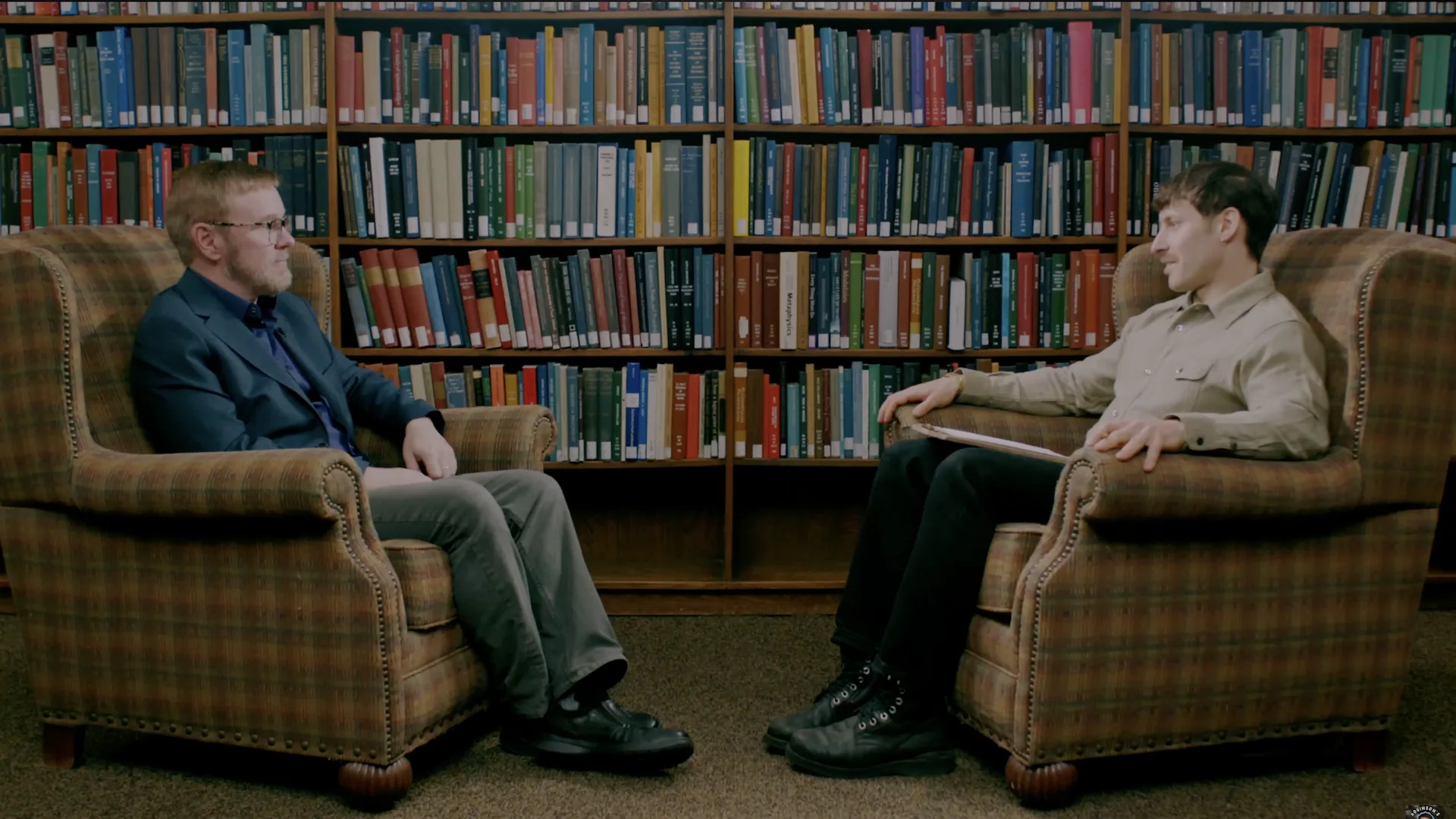
In a significant excerpt from a public interview (see below), Nolan makes a statement that reverberates throughout the contemporary discussion: the UAP phenomenon is not only real — it shows characteristics that suggest intelligence and an origin that does not match known patterns of human technology.
This moment matters because it is one of the rare occasions when a researcher with such strong credentials explicitly connects scientific work to the possibility of a non‑human origin. He does not appeal to speculation; he states — cautiously, from experience — that the data he helped analyze does not fit neatly within conventional explanations.
From anomaly to method
In interviews and talks, Nolan is careful to avoid premature conclusions. He does not claim to know exactly what UAPs are, but he argues there is enough data to justify open scientific investigation, outside of overly classified programs.
Whether analyzing brain imaging with unusual neurological patterns or studying metallic fragments with atypical structures and purities, his posture is consistent: don’t ridicule, don’t claim beyond the evidence — but also don’t ignore what challenges simple explanations.
That balance — skeptical yet curious — is rare in a topic historically polarized between automatic disbelief and uncontrolled speculation.
The SOL Foundation and the institutionalization of the debate
In 2023, Nolan went a step further by co‑founding the SOL Foundation. The initiative has a clear goal: to create an institutional space where the UAP phenomenon can be treated as a legitimate scientific, political, and cultural problem — without stigma.
SOL brings together academics, military professionals, policymakers, and researchers from diverse fields, promoting symposia, reports, and recommendations aimed at transparency, democratic oversight, and open research. The goal is not to prove a specific hypothesis, but to structure the field so that hard questions can finally be asked responsibly.
In that sense, Nolan acts less as a “spokesperson” and more as an architect of method.
Why Garry Nolan matters
In the context of UAP Disclosure, Garry Nolan plays a singular role: he functions as a bridge of legitimacy between two worlds that rarely spoke to each other — high‑level academic science and a historically marginalized phenomenon.
His presence doesn’t solve the mystery. But it changes the game. When someone with his background says there is a real problem there, worthy of serious investigation, the question stops being “is this absurd?” and becomes: What are we failing to understand — and why?
Debates mature through this kind of shift. And that is why, whether we like the topic or not, Garry Nolan has become an unavoidable name in the current phase of the UAP phenomenon.